
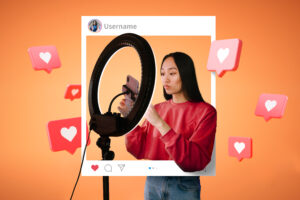
IN SOCIAL MEDIA, there has arisen a band of self-appointed experts providing unsolicited advice. They are tagged as “influencers.” They can give opinions on any topic of their choosing. There is no vetting process in certifying the validity of their expertise or opinion. It has become a competitive field that thrives on the number of followers an influencer can attract. (Please push the subscribe button to bring up our numbers.)
Claimed areas of expertise seldom provide any kind of certification or validity, unlike medicine, accounting, engineering, or law. These accredited disciplines require academic preparation and validation tests for acceptance into an expert fraternity. There are even sub-specializations in these fields.
For less exacting pursuits like career counseling, personal finance, motivational training, or art investment, one can only rely on a mix of awards, experience, referrals, and peer respect. Even these validations are not always reliable.
In the matter of art, for example, who’s to say what is or isn’t good art? If art is treated as an investment, what are the collectors and auction houses looking for in terms of value?
An acknowledged icon of pop art sums up his take on what constitutes art. Andy Warhol defined art as “whatever you can get away with.” This loose definition applies to what is called “installation art” which is not some-thing you can hang on a wall. It may be a temporary structure or setting that is meant to last until the end of the exhibit.
The ability to dazzle with expertise one does not possess requires some cunning. So, expertise is what experts say it is…unless there are other experts who happen to offer contradictory opinions. Critics who pounce on es-tablished influencers are branded as simply envious.
The role of the influencer may have started with talk shows in the old traditional media of television. This has migrated to online shows like TED talks. And finally, the current version of very short demos or chats.
Can someone who routinely throws off brown stuff pass himself off as an expert on any field?
Maybe, resource persons appearing on posted videos are not paid for their appearances. Still, they manage to leverage their roles as talking heads with others willing to give them an actual fee for their “influence.”
Even with the rise of search engines to check on any topic for more information, influencers manage to insert themselves into the process. Don’t they also do their “research” on the net? Is their cut-and-paste presen-tation even subject to charges of plagiarism?
Borrowed insights can surface in the chatter of supposed experts. Their opinions on various topics can come from scouring the internet and extracting expert-sounding essays from ChatGPT.
Such is the proliferation of the new breed of self-anointed experts that when a “Gen Z” netizen is asked what career he wants to pursue, he is likely to reply: “I want to be an influencer.” Traditional careers like accountants and architects have been overtaken by work-from-home options such as influencing.
Communications experts and PR practitioners now routinely include social media in their arsenal of pushing narratives that promote their clients’ position.
If influencers want to move the needle in terms of opinions, can they be used for marketing goods, services, and political positions? Can influencers be motivated to push a particular point of view? Can they peddle their in-fluence? Are they more potent than traditional celebrity endorsers?
Still, with the recent proliferation (and competitiveness) in the field of influencing, the tendency for their target audience is to pay attention to influencers that they already agree with.
What behavioral economics calls the “confirmation bias” dictates that the consumers of opinions want to hear from those who already agree with their own beliefs. Thus, the “echo chamber” effect ensures that the one be-ing influenced is already a believer.
The value of influence is short-lived. The influencers can come and go at the drop of a hat. The fame that brings in the followers can also fade.
Again, we hark back to Andy Warhol, who in the late sixties said that “Everyone will be famous for 15 minutes.” This time around, fame and influence can last much less than that.
Tony Samson is chairman and CEO of TOUCH xdaar.samson@yahoo.com